How do I build a client journey for a fitness business?
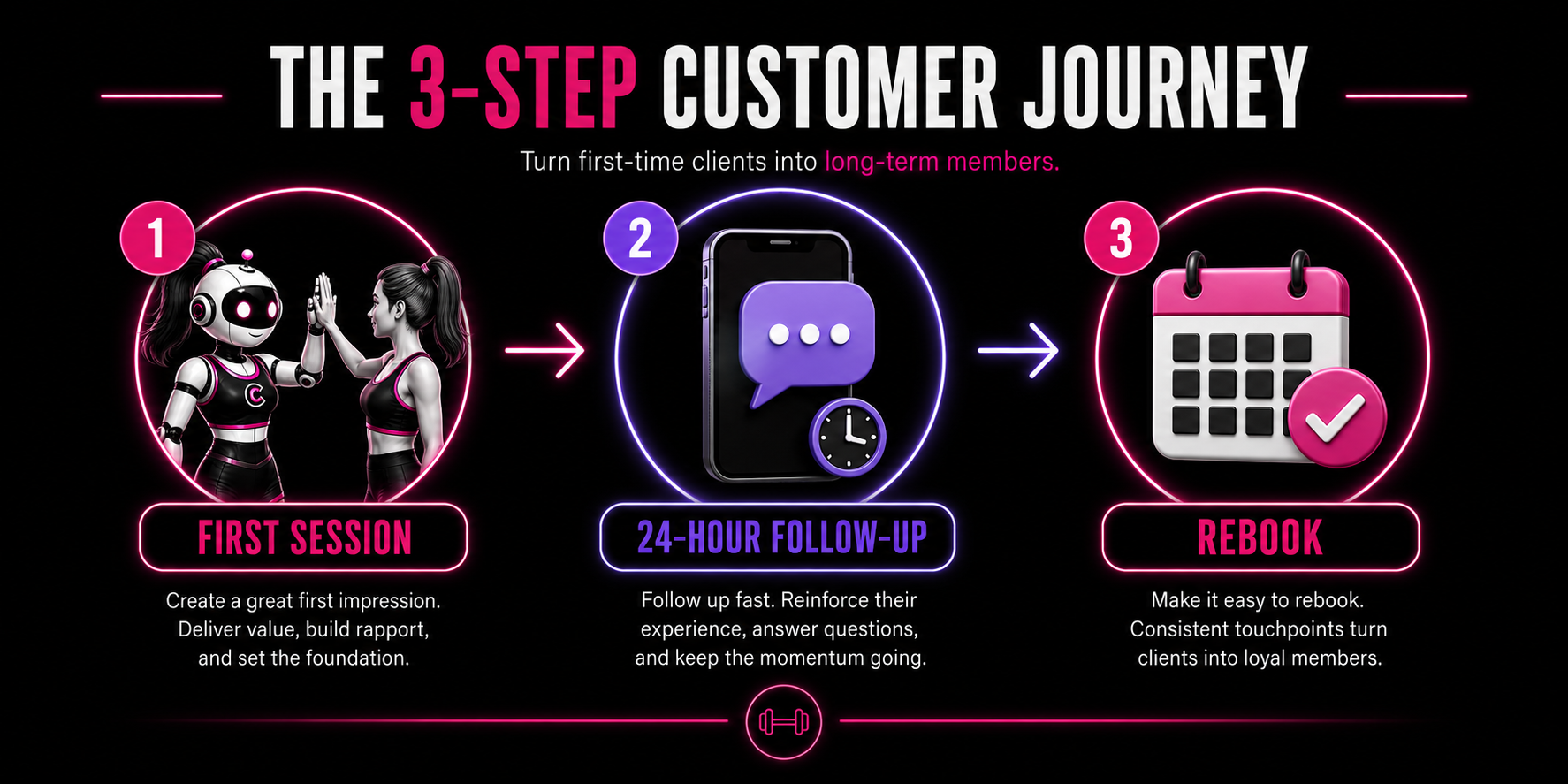
A client journey is the path someone takes from first hearing about your business to becoming a repeat client. For a new fitness or wellness business, build it around three fixed points from your very first client: a clear standard for the first session, a personal follow-up within 24 hours, and a rebooking path that takes under 10 seconds to find on your website.
TL;DR
Most new fitness businesses build their client journey by accident, one client at a time, and only notice the gaps once growth stalls
The three non-negotiable touchpoints are: the first session, the 24-hour follow-up, and the rebooking path
A new business has the advantage of building this properly before bad habits set in with 50+ clients
Your website is part of the journey, not separate from it — if rebooking is hard to find, the journey breaks there
Document the journey now, even informally, so it survives you hiring your first staff member
Why these three matter
The first session is an audition, not just service delivery. Confirm the client's goal in the first five minutes, reference it explicitly during the session, and end with a specific invitation to book again — not a vague goodbye.
The 24-hour window is where most businesses lose people without noticing. A personal message referencing something specific from the session, with a direct link to rebook, closes that gap while the experience is still fresh. No automation needed at first — send it yourself.
Your website is part of the journey, not separate from it. If rebooking is hard to find, the journey breaks there, no matter how good the first session and follow-up were.
The advantage of building this deliberately rather than letting it happen by accident: with a small client base you can personally follow up with everyone and spot friction immediately. Once volume grows, you're relying on memory or staff consistency — and that's usually where retention quietly breaks down. Document the standard now, even as a simple checklist, so it survives scaling.
Introduction
Most people starting a fitness or wellness business think about their offer, their pricing, and their first marketing push. Almost nobody thinks about what actually happens between a stranger's first booking and their tenth visit.
That gap is the client journey. And whether you're a solo PT taking your first booking or a studio owner with three staff, the businesses that grow predictably are the ones who built this journey on purpose, not by accident.
Here's what that actually looks like, and why doing it now — before you have a client list to retrofit — is the easiest version of this work you'll ever do.
What is a client journey, really?
A client journey is every interaction a person has with your business, mapped in order — from the moment they first hear about you to the moment they become a loyal, repeat client (or stop coming).
For an established gym or studio, that journey might span months and include emails, app notifications, in-person check-ins and loyalty perks. For a brand-new business, it's much simpler. It usually comes down to three moments: the first session, what happens right after it, and how easy it is to come back.
The mistake new business owners make isn't skipping this — it's assuming it'll just happen naturally because they care about their clients. Care doesn't show up in a system. Process does.
Why does this matter more before you have clients than after?
It's tempting to think process can wait until the business is established. The opposite is true. Building the journey with your first 10 clients is far easier than retrofitting it onto your first 100.
With 10 clients, you can personally follow up with every single one, by hand, and notice exactly where the friction is. With 100, you're relying on memory, goodwill, or hoping your front desk staff do it consistently — and that's usually where retention quietly breaks down.
New businesses also don't carry bad habits yet. If you start with a vague "see you next time" instead of a specific rebooking prompt, that habit compounds across every client who joins after.
What should the first session actually achieve?
The first session isn't just service delivery — for the client, it's an audition. They're deciding whether this is worth their time and money again.
A first session that builds the journey properly does three things: the practitioner knows the client's name and goal before they arrive, the session is visibly connected to that goal at least once, and it ends with a specific, personal invitation to book again — not a vague goodbye.
Confirm the client's goal verbally in the first five minutes
Reference that goal explicitly at least once during the session
End with: "Based on today, I'd recommend [specific next step] — want me to book that in now?"
What happens in the 24 hours after the first session?
This is the window where most new businesses lose people without realising it. The client leaves, life takes over, and the longer the gap before any contact, the colder the relationship gets.
A personal message within 24 hours — referencing something specific from the session, with a direct link to rebook — closes that gap while the experience is still fresh. This doesn't need automation tools at the start. For your first clients, send it yourself.
What should a new fitness business do about this?
Write down your first-session standard now, even as a simple checklist, before you have staff to train on it
Set a personal reminder to follow up with every new client within 24 hours until it's automatic
Test your own website like a new client would — time how long it takes to find the booking button
Build the rebooking link into every follow-up message, not just your homepage
Revisit this journey every time you bring on staff or hit a new client milestone (10, 50, 100)
Common questions about building a client journey
Do I need software to do this when I'm just starting out? No. For your first 10–20 clients, a personal message and a shared spreadsheet to track follow-ups is enough. Software becomes useful once volume makes manual tracking unreliable.
What if I'm a solo practitioner with no front desk staff? The journey is still the same three touchpoints — you're just the one executing all of them. Block time after each session specifically for follow-up messages so it doesn't get skipped.
How is this different from a sales funnel? A sales funnel focuses on getting someone to buy once. A client journey focuses on what happens after they've already said yes, so they keep coming back.
Does my website really matter this early? Yes. If a new client decides to rebook and your site doesn't make that obvious, you've lost the moment you worked hardest to create in the first session and follow-up.
What's the biggest mistake new business owners make here? Treating the client journey as something they'll formalise "later, once the business grows." The habits you build with your first clients are the habits your business runs on at scale.
Conclusion
A client journey built deliberately from your first client is far easier than one patched together after growth exposes the gaps. Start with the first session, the 24-hour follow-up, and a rebooking path that's actually easy to find — and you'll avoid the retention problems that catch most new fitness and wellness businesses off guard.
If your website is the weak link in that journey — hard to navigate, no clear booking path, nothing that makes rebooking obvious — that's exactly where Crush It Digital comes in. Book a free website and booking-journey audit and we'll show you where new clients are getting stuck.